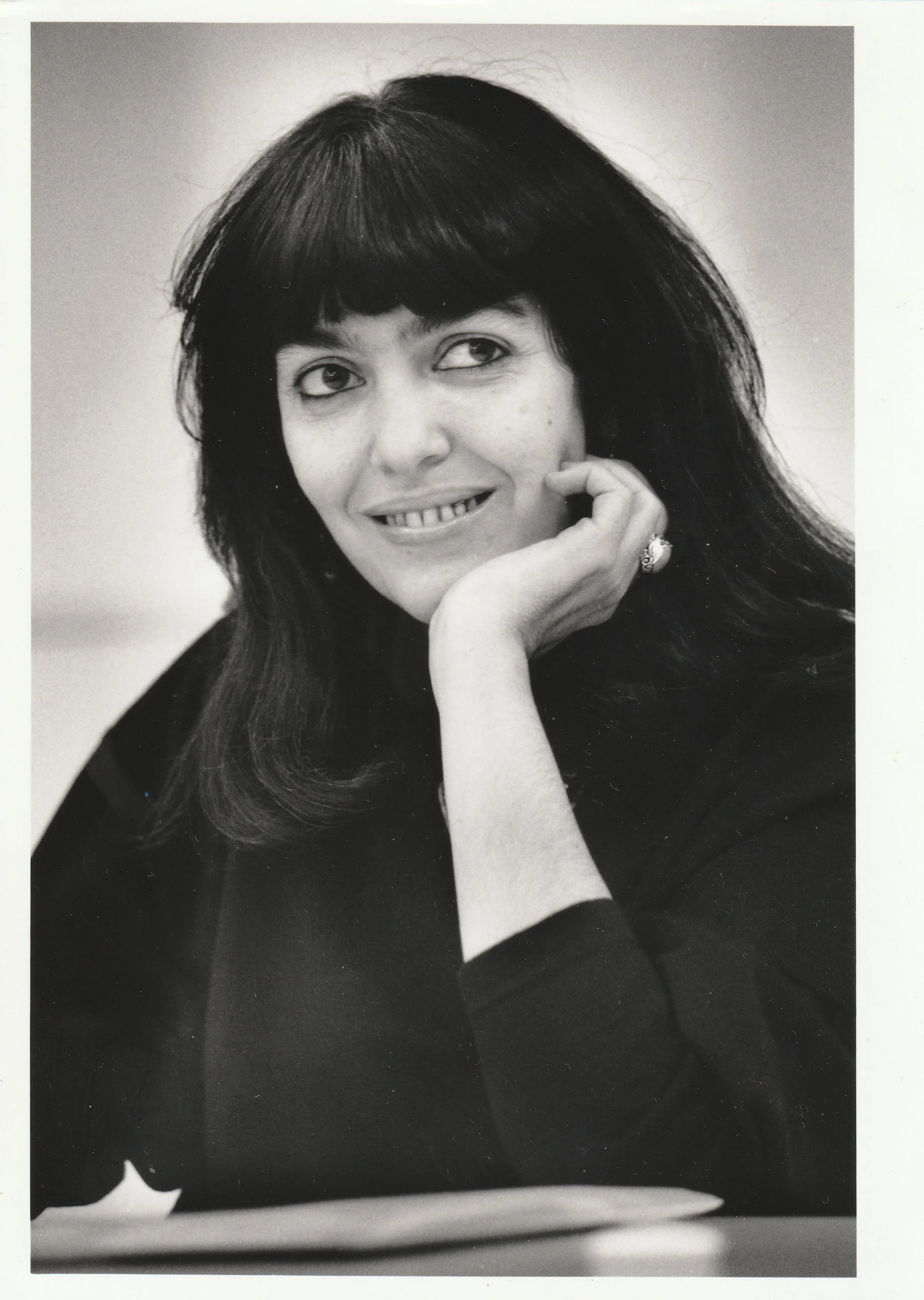
In Memory of Eleni Varikas, 1949–2026
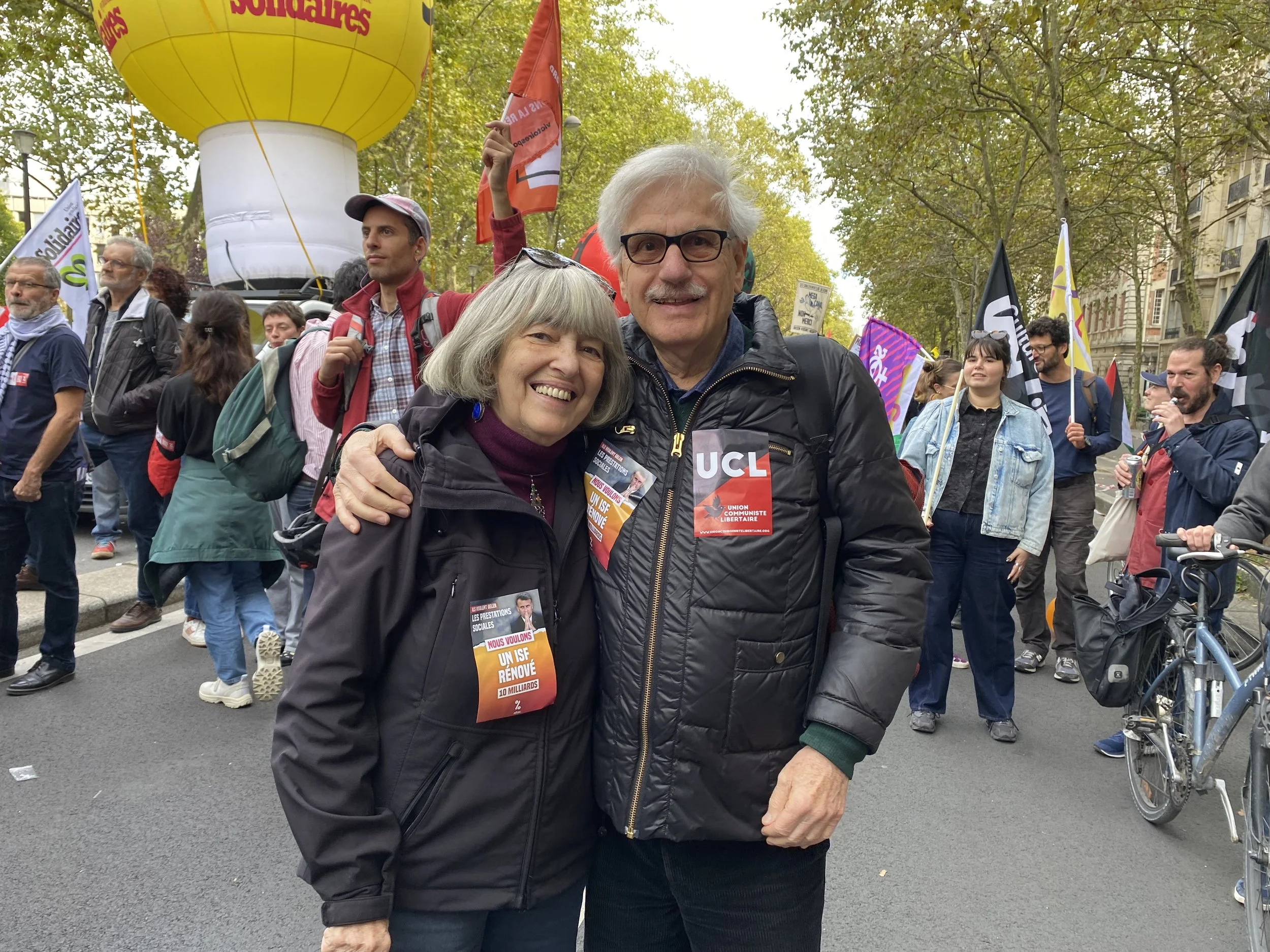
The Daniel Singer Foundation mourns the death of Eleni Varikas, a cherished colleague, friend, and member of our Board. Eleni’s passing, on January 9 from heart failure while being treated for lung cancer, is an immeasurable loss to all who knew her and to the many intellectual and political communities she helped shape over a lifetime of commitment, creativity, and struggle.
Born in Athens in 1949, Eleni Varikas was the daughter of Joanna Askitopoulou, a Greek refugee from Asia Minor and Vassos Varikas, a distinguished Greek Marxist journalist and literary critic and an early figure of the Trotskyist Left Opposition in Greece. From an early age, Eleni inherited a deep engagement with politics, culture, and critical thought. As a student of history at the University of Athens, she became active in resistance to the Greek military dictatorship and was encouraged by her father to travel to Paris during the upheavals of May 1968—an experience that left a lasting mark on her political and intellectual trajectory.
In 1971 Eleni went to Paris, to study under leading historian Georges Haupt. Returning to Greece after the fall of the dictatorship (1974) she played a prominent role in the Greek section of the Fourth International, serving on the editorial board of Odofragma (“The Barricade”) and becoming a key figure in the revolutionary left. She was also put on trial in 1976 for translating a banned radical text, The Little Red Book for Schoolchildren and High School Students, sentenced to prison, and later acquitted—an episode emblematic of her courage and refusal to bend in the face of repression.
After 1978, Eleni increasingly devoted her energies to feminism and became one of the pioneers of the feminist movement in Greece. In 1981 she returned to Paris on a scholarship to pursue doctoral research with Michelle Perrot on the historical origins of modern Greek feminism. Her thesis, La Révolte des Dames (1986), received the highest academic distinction and remains a foundational work in Greek feminist historiography.
Eleni went on to become one of the major figures in feminist political theory and gender studies in the Francophone world. A professor of political philosophy at the University of Paris 8–Saint-Denis, she played a decisive role in introducing and theorizing the concept of “gender” in French intellectual life. In 1988, she translated Joan Scott’s seminal essay “Gender: A Useful Category for Historical Analysis” into French, helping to reshape entire fields of research.
Her own books—including Penser le sexe et le genre (2006), Les rebuts du monde. Figures du paria (2007), and Pour une théorie féministe du politique (2017)—offered a powerful feminist rereading of the canon of political thought, recovering marginalized figures such as Olympe de Gouges, Mary Wollstonecraft, and Flora Tristan, and interrogating the exclusions at the heart of modern notions of universality, citizenship, and freedom.
Across her work, Eleni developed a profound and original reflection on “pariahs”—those excluded from full political belonging—and on what Hannah Arendt called “a place in the world.” Her thinking bridged Marxism, feminism, and critical theory, and spoke directly to questions of democracy, emancipation, and injustice in the modern world.
Eleni was also a tireless international intellectual, teaching and lecturing at universities across Europe, the Americas, and beyond, including Harvard, Columbia, The New School, the European University Institute in Florence, the University of São Paulo, and many others. She served on the editorial boards of leading journals such as Pouvoirs, Raisons Politiques, and Les Cahiers du Genre, Gender & History, and contributed to numerous collective works that shaped feminist and critical scholarship.
She was the life partner of Michael Löwy, with whom she shared a remarkable intellectual and political companionship, including joint work on figures such as Max Weber and the traditions of anarchism and Marxism. Eleni and Michael have both been active members of the Daniel Singer Foundation, and were close friends with Daniel and Jeanne in Paris. Michael reported that Eleni had a particular rapport with Daniel because of their shared admiration and affection for Rosa Luxemburg.
For those who knew her personally, Eleni’s intellectual brilliance was inseparable from her warmth, generosity, and irrepressible joie de vivre. She was known for her magnetic presence, her iconoclastic spirit, her deep erudition, and her unwavering moral seriousness and political commitment. Eleni embodied an exceptional combination of political rigor, intellectual independence, and human kindness.
Eleni Varikas leaves behind a rich and enduring body of work, and a legacy of solidarity, feminism, and critical thought that will continue to inspire generations. For the Daniel Singer Foundation, her absence is deeply felt—not only as a thinker and activist, but as a comrade and friend whose voice, laughter, and insight were an essential part of our collective life.
Her memory will remain a source of strength, clarity, and hope in the struggles she devoted her life to.